
San Diego County
ADU Regulations
ADU regulations in San Diego County are governed by a combination of California state housing laws and local zoning regulations.
State legislation requires cities and counties to allow ADUs in residential zones while limiting overly restrictive local rules.
Properties located in unincorporated areas are regulated by San Diego County Planning & Development Services.
Within city limits, ADU permits are typically managed by the local planning or development department. For example, projects within the city of San Diego are reviewed by the City of San Diego Development Services Department.
Statewide housing policies are overseen by the California Department of Housing and Community Development.
City vs County ADU Regulations
San Diego County includes both incorporated cities and unincorporated areas.
Understanding the difference is important when planning an ADU.
Incorporated Cities
Cities such as:
- Carlsbad
- Chula Vista
- Encinitas
- Oceanside
have their own zoning ordinances and development standards.
Unincorporated Areas
Properties outside city boundaries fall under county jurisdiction and must follow regulations administered by:
Although regulations differ slightly, most jurisdictions follow California state ADU requirements.
Unincorporated Areas
Properties outside city boundaries fall under county jurisdiction and must follow regulations administered by
San Diego County Planning & Development Services.

How Many ADUs Are Allowed
in San Diego?
The number of ADUs permitted depends on the property type.
Single-Family Homes
Most single-family properties can build:
- 1 Accessory Dwelling Unit (ADU)
- 1 Junior ADU (JADU)
This allows homeowners to have two accessory housing units on one lot.
Multifamily Properties
Multifamily properties may add additional ADUs through:
- conversion of non-habitable spaces such as storage rooms or garages
- construction of detached ADUs on the property.
The exact number allowed depends on existing units and available space.
San Diego
ADU Size Limits
California law also requires jurisdictions to allow at least an 800 sq ft ADU in many circumstances.

ADU Type
Maximum Size
Detached ADU
Up to 1,200 sq ft
Attached ADU
Up to 50% of primary home size
Junior ADU
Up to 500 sq ft
San Diego County
Site Standards
ADU Setbacks and
Height Limits
Setbacks
Most jurisdictions require minimum 4-foot side and rear setbacks for ADUs.
- adequate space between structures
- emergency access
- neighborhood compatibility
Height Limits
Typical height limits for detached ADUs range between 16 and 25 feet, depending on zoning and location.
Additional height allowances may apply in areas close to public transit or on multifamily properties.
Parking Requirements for ADUs
California ADU laws significantly reduce parking requirements.
The ADU is within ½ mile of public transit
The ADU is created through a garage conversion
The property is located within a historic district
General Rule
If exemptions do not apply, jurisdictions may require one parking space per ADU.
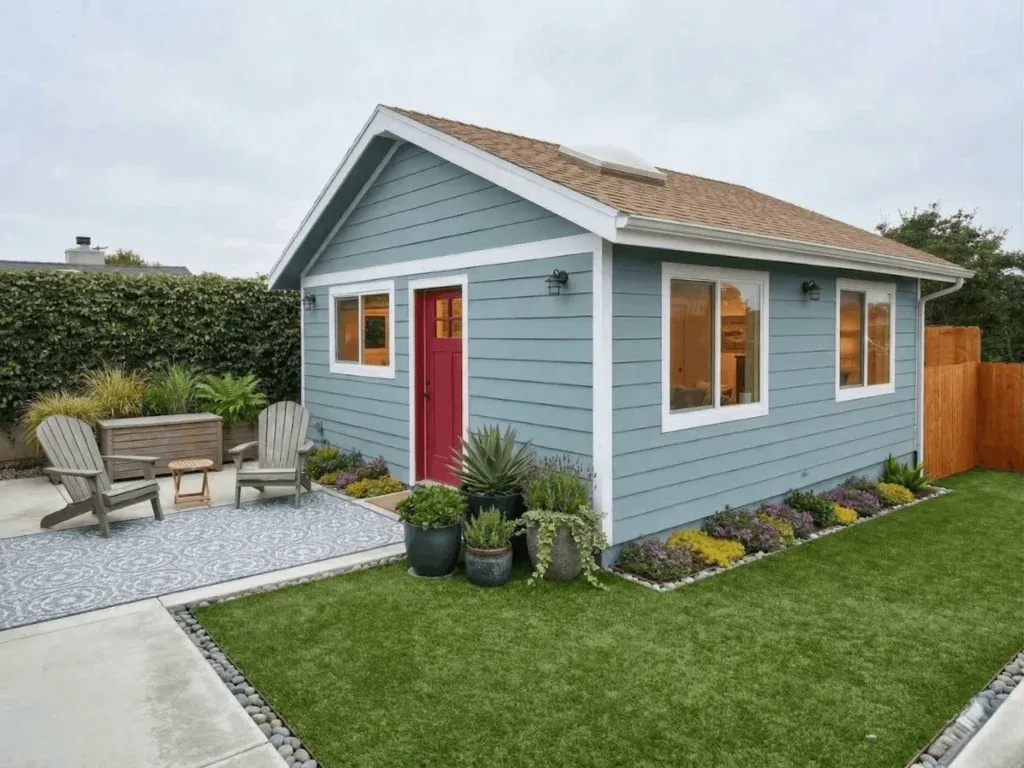
ADU Impact Fees in San Diego
- ADUs smaller than 750 sq ft are typically exempt from impact fees
- larger units may pay proportional development fees.
Coastal Zone
ADU Regulations
Some San Diego properties fall within the coastal zone.
“In these areas, additional approvals may be required from the California Coastal Commission.”
Homeowners should confirm whether their property is located in the coastal zone before submitting ADU plans.

ADU Permit Process in San Diego County
Building an ADU typically involves the following steps.
Feasibility Study
Evaluate zoning regulations, lot conditions, and development potential.
Architectural Design
Designers or architects prepare plans that comply with zoning and building codes.
Permit Submission
Plans are submitted to the appropriate planning department.
Plan Check Review
Officials review the plans for building code and zoning compliance.
Construction
Once permits are approved, construction can begin.
Final Inspection
Inspectors confirm the project meets approved plans and safety requirements.
Ready to Build Your San Diego ADU?
Urbatect handles everything — from custom ADU design to construction — so you don’t have to manage multiple vendors.
How Long Does It Take
to Get an ADU Permit?
Cost to Build an ADU in San Diego County
Construction costs vary based on size, design complexity, and site conditions.
Major cost factors include:
- Site grading or slope
- Utility upgrades
- Construction materials
- permitting and design fees.
Need Help Financing Your ADU?
Urbatect connects you with trusted ADU lending partners offering HELOCs, cash-out refis, and construction loans tailored for California homeowners.
Can You Rent an ADU in San Diego?
Yes. ADUs are commonly used for long-term residential rentals.
“Short-term rentals may be regulated by local jurisdictions. For example, the city of San Diego has specific regulations governing short-term rentals.”
Homeowners should verify rental rules before using an ADU for short-term accommodations.
San Diego
ADU Rental Rules
Cities in San Diego County
That Allow ADUs
ADUs are permitted in most residential zones throughout the county, including:
San Diego
Chula Vista
Carlsbad
Oceanside
Encinitas
Escondido
La Mesa
El Cajon
Each city may apply additional zoning or design guidelines.
Official Sources & References
City of San Diego Development Services Department
San Diego County Planning & Development Services
California Department of Housing and Community Development
California Coastal Commission
Frequently Asked Questions
What is the minimum ADU size in San Diego?
California law requires jurisdictions to allow ADUs of at least 800 square feet in many circumstances, even if local zoning rules would otherwise restrict size.
Do I need parking for an ADU in San Diego?
Parking is often not required if the ADU is near public transit, created through a garage conversion, or located in certain urban areas.
Can I build two ADUs on one property?
Most single-family properties can build one ADU and one Junior ADU, allowing two accessory housing units on the same lot.
Are impact fees required for ADUs?
ADUs smaller than 750 sq ft are typically exempt from development impact fees, while larger units may be subject to proportional fees.
Can ADUs be sold separately?
California law now allows jurisdictions to permit separate ADU sales under certain conditions, although implementation varies by city.
How long does ADU construction take?
After permit approval, construction typically takes 6–12 months, depending on project complexity.
Are prefab ADUs allowed in San Diego?
Yes. Prefabricated ADUs are permitted if they meet local building codes and zoning regulations.
Do ADUs increase property taxes?
Building an ADU may increase the assessed value of the property, which can result in higher property taxes.